Kawasaki Z250SL: The Case for Buying Less Bike
Nearly everyone who walks in here having just passed their test wants a 600. A fair few want more than that. The logic is easy enough to follow. You have spent months and the better part of a grand getting the licence, and after all that, a bike that runs out of puff at 80mph feels like buying a pushbike because you learned to swim.
I would gently suggest the opposite. The best first bike is usually the smallest one you can genuinely live with, and the Kawasaki Z250SL is a tidy illustration of why.
First, work out which one you are looking at
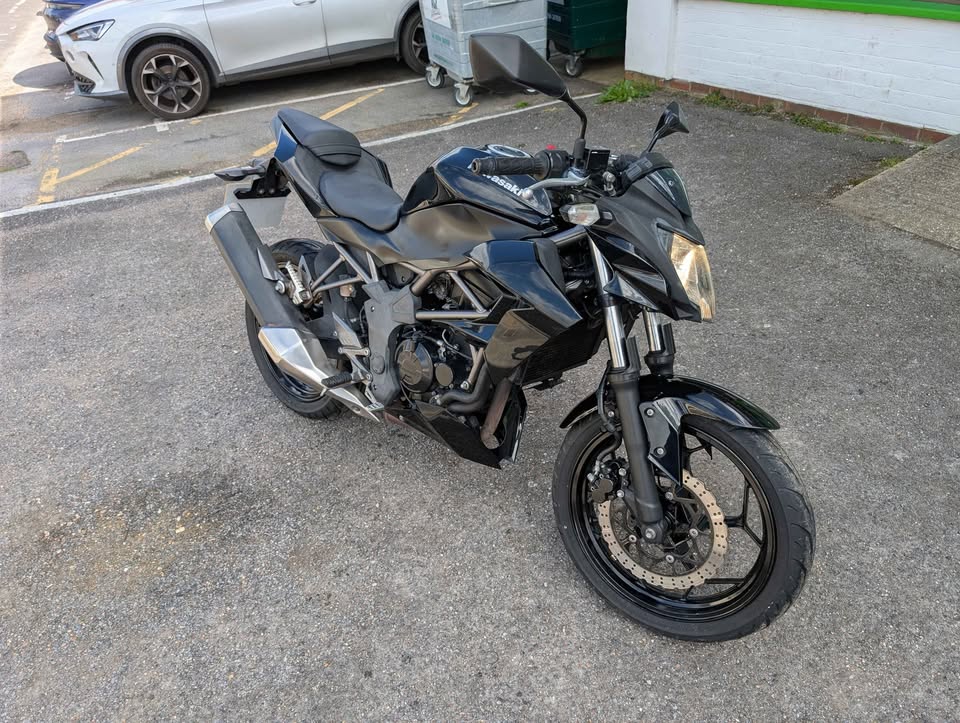
Kawasaki sold two different 250 nakeds in the middle of the last decade and gave them nearly the same name. Most of Asia and Australia got the Z250, a parallel twin borrowed from the Ninja 250. Britain got the Z250SL, which is a single. SL stands for Super Lightweight, and unusually for a marketing suffix, it is just a description of the thing.
Sellers muddle the two constantly, trade sellers included. If you are shopping, count the pipes leaving the front of the cylinder head. One header is the single, which is what you will find on almost every UK registered example. Two headers means you are looking at either a grey import or a Z300 that somebody has typed up wrong.
The numbers on the SL: 249cc, liquid cooled, one cylinder. 20.6kW at 9,700rpm, which is a shade over 27 horsepower. 22.6Nm of torque. Six gears. A 785mm seat, and 148kg with all eleven litres of fuel on board.
The weight is the whole argument
That last figure is the one that matters, and it does not mean much until you park it next to what people usually buy first. An MT-07 is about 184kg. A CB500F is around 190. A middleweight adventure bike is comfortably past 200 before you have hung anything off the sides of it.
Thirty five to sixty kilos does not sound like a lot written down. It is the difference between paddling backwards up a slope and deciding you will just ride round the block again. It is the difference between a full lock U-turn being a manoeuvre and being a non-event. It is the difference between picking the bike up yourself when it goes over in a car park, which it will, because everybody drops one eventually.
Low speed control is where new riders lose their confidence, and confidence is the thing that actually makes you safe. A light bike gives you that in weeks. A heavy one can take years, and some riders never quite get there. They just stop going out.
It is not fast, and that matters less than you would think
Let us be straight about it. Top end is somewhere around 80. It will sit at 70 on the M271 or the run up the A36 towards Salisbury without complaining, but you are using most of what it has got to do it, and the overtake you fancy at 65 is not really available. A long motorway slog is a chore. That is a genuine limitation and I am not going to dress it up.
Everywhere else it is a completely different proposition. It is light, it is geared short, and it revs out happily, so through town and on the sort of B road you would actually choose to ride, it feels quick in a way the numbers do not suggest. On a New Forest road with a 40 limit and ponies wandering about, 27 horsepower is not remotely the constraint.
Here is the bit that gets missed. A bike you can use all of, all of the time, will teach you more in one summer than a bike that frightens you will teach you in three years. You learn to carry speed through a corner instead of squirting between them. You learn to be smooth, to read a surface, to keep momentum. All of that transfers to whatever you ride next. Horsepower teaches you nothing at all.
What it costs to keep on the road
Insurance sits near the bottom of the groups, which for a rider in their first year is the difference between a premium you grumble about and one that makes you reconsider the whole idea.
Fuel is the high seventies to low eighties in miles per gallon if you are not hammering it, so an eleven litre tank is worth roughly 190 miles between stops. The tyres are a 100/80 front and a 130/70 rear on 17 inch wheels, which is to say small, cheap, and stocked by everyone. Pads, oil and a chain and sprocket set for a 250 single cost what they cost, which is not much.
The point of all this is not that it is cheap. It is that it is cheap enough that you ride it. A bike that stings you every time it needs tyres tends to end up under a cover in the garage, which is the most expensive thing a motorcycle can do.
Where it runs out of talent
There is no wind protection at all, so 70mph for an hour is tiring in a way that has nothing to do with the engine. The seat is fine for a couple of hours and honest about it after that. The suspension is budget kit and firm over broken tarmac. Carrying a pillion is technically possible and enjoyable for neither of you. If you are over about six foot two or carrying a bit of weight, it will feel like a small bike, because it is one.
None of that is a fault. It is a £2,000 250 doing exactly what a £2,000 250 does.
The licence bit, because this one catches people out
A 250 is not a CBT bike. A CBT with L plates caps you at 125cc and 11kW, so the Z250SL is out. It is also out on a full A1 licence, which has the same 125cc ceiling.
You need an A2 licence or a full A. The good news is that at 20.6kW the SL sits well under the A2 ceiling of 35kW as it comes, with no restriction kit and no certificate to wave at your insurer. That is worth more than it sounds. A lot of the popular A2 options need restricting, and a restriction that has not been documented properly is exactly the sort of thing that gets interesting at claim time.
If you are still working out which licence you are aiming at, we can point you at the right course. Have a look at our rider training page.
Who should actually buy one
Someone who has just passed their A2 or done Direct Access and wants to spend their first year riding rather than surviving. Someone commuting into Southampton who has worked out that filtering on a 148kg bike is a pleasure and filtering on a 220kg one is a job. A returning rider who has been off bikes for a decade and would rather rebuild the confidence on something forgiving. Or anyone who wants a cheap second bike so the good one stays dry through the winter.
There is a resale argument too. Small, sensible, cheap bikes hold their money because there is always another newly qualified rider coming along behind you. You will lose a good deal less over a year on a £2,000 250 than on a £7,000 middleweight, and if you get eight months in and decide you want more bike after all, you will not be punished for it.
The one sitting in Totton
We have got a 66 plate Z250SL in at the moment. 12,300 miles, black, new MOT on sale, £2,195. The service history is limited and we say so on the listing rather than hoping you do not ask. It runs and rides exactly as it should.
Have a look at the full listing and photos, or come and see it. Viewings are by appointment in Totton and you are welcome to bring somebody who knows bikes better than you do. We would rather you did.
If you are earlier in the process and still working out what you want, our guide on what to look for in a first motorcycle covers the rest of it. Or just message us on WhatsApp and ask. No pressure, and no sales patter.